
eBron James turned 40 in December 2024, an age that usually marks the closing chapter of an NBA career. Yet the question “Is LeBron James really getting old” remains difficult to answer after watching him control games with the force and precision of a much younger star. He no longer attacks every possession at full speed, but that change looks less like decline than calculated conservation. During his 22nd season, James has continued to create shots, push the ball in transition and punish smaller defenders in the post. The explosive dunks are less frequent, and recovery between games clearly matters more than it once did. Still, a player who can dictate defensive matchups and produce stretches of dominant basketball is not simply hanging around for sentimental reasons. Is LeBron James really getting old?Physically, yes. Competitively。the answer is far less obvious.The clearest evidence of age appears in the rhythm of his workload. James has increasingly relied on careful pacing。selective bursts and extended stretches as a playmaker rather than trying to win every possession with athletic force. Earlier in his career, he could erase a defensive mistake with a 30-foot chase-down sprint or carry an offense through an entire fourth quarter. Now, the Lakers must manage his minutes and provide enough shooting around him to keep the floor open. That is not an insult;it is the normal adjustment required when an athlete has spent more than two decades absorbing NBA contact. The question “Is LeBron James really getting old” becomes more revealing when the standard is his younger self. Against that version of James, every current limitation is obvious. Against the rest of the league, he remains unusually efficient, physically imposing and capable of turning a close game within minutes.
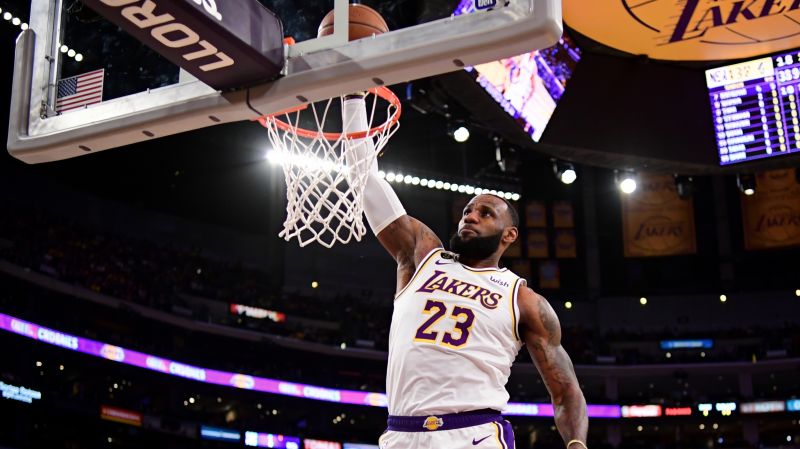
Age has also changed the way opponents defend him. Teams are less concerned about James beating them repeatedly off the dribble from the top of the key, particularly when his first step is not as violent as it was during his Cleveland and Miami years. They shade help toward his driving lanes, force him to make earlier decisions and test his willingness to shoot from outside. That strategy works at times。especially when the Lakers lack consistent spacing. But James has answered by using his size, passing vision and basketball memory. He sees rotations before they fully develop, recognizes mismatches almost instantly and often creates the best shot without touching the rim. Is LeBron James really getting old?
The answer depends on whether aging is measured by speed alone or by the total package. His legs are not what they were, but his reading of the game may be sharper than ever.The larger concern is durability, not talent. A long NBA season exposes small problems that a single nationally televised game can hide: soreness after travel, reduced practice time。the need for recovery between back-to-backs and the occasional night when his energy simply is not there. James has also carried the physical burden of playing deep into the postseason year after year, while international competition and training demands have added to the mileage. Asking him to lead every possession, defend elite wings and remain fresh in April is no longer realistic. Is LeBron James really getting old?Certainly, if the question concerns the body’s ability to repeat peak performances every other night. The Lakers have to build around that reality rather than pretend that reputation can replace depth. A veteran star can still be the engine, but he cannot be expected to provide every part of the machine.What makes the debate so compelling is that James has moved the definition of longevity. Most players his age are retired, coaching。or far removed from a central role. He is still a primary decision-maker, a respected locker-room voice and a player opponents design game plans around. His decline, where it exists, is measured against an almost impossible standard: the version who once dominated the league through speed, power and endless stamina. Is LeBron James really getting old?
Yes, in the ordinary athletic sense, and anyone denying that is ignoring the visible changes. Yet “old” does not mean irrelevant, and it does not mean finished. James now wins with timing, leverage and judgment as much as with force. The real issue is not whether Father Time has arrived. It is how much elite basketball James can still produce after it has begun asking for payment.